

We’ve long understood the importance of borders for physical goods. Tariffs, regulations, and checkpoints control the flow of materials across nations, ensuring both economic benefit and security. But for data, borders are virtual. Trillions of gigabytes of personal, commercial,
and industrial information flow across continents each day—untaxed, untracked, and largely unregulated.
The concept of Digital Tariffs would challenge this norm by recognizing data as a sovereign asset—something that should be governed, taxed, and monitored when it leaves its nation of origin. Just as a barrel of oil or a ton of steel is accounted for, so too should data be measured and managed.
The Illusion of a Global Digital Free-for-All
Today, major tech companies—Amazon, Google, Facebook—operate data centers across multiple jurisdictions, moving user data across borders with little friction. This data is monetized, analyzed, and sold, often without the knowledge or consent of the individuals generating it. Countries are losing out on billions in potential revenue, while corporations benefit from regulatory loopholes.
Example 1: Meta’s Data Operations
Meta processes vast amounts of European user data in the United States for targeted advertising. Under a Digital Tariff framework, every gigabyte transferred out of the EU would incur a cost, aligning data movement with economic contributions to the country of origin. This could encourage localized data storage, boosting infrastructure investments domestically.
Data Sovereignty: Redrawing Digital Borders
Data sovereignty is the principle that information is subject to the laws and governance structures within the nation it is collected. It’s the digital equivalent of border control for information. Countries like China and India are leading the way in enforcing these principles.
Example 2: China’s Data Localization Requirements
Under China’s Cybersecurity Law, all personal data collected from Chinese citizens must be stored within China’s borders. By implementing Digital Tariffs, China could extend this control even further, taxing every megabyte that leaves its jurisdiction, strengthening both its economy and its grip on information flows.
How Digital Tariffs Would Work
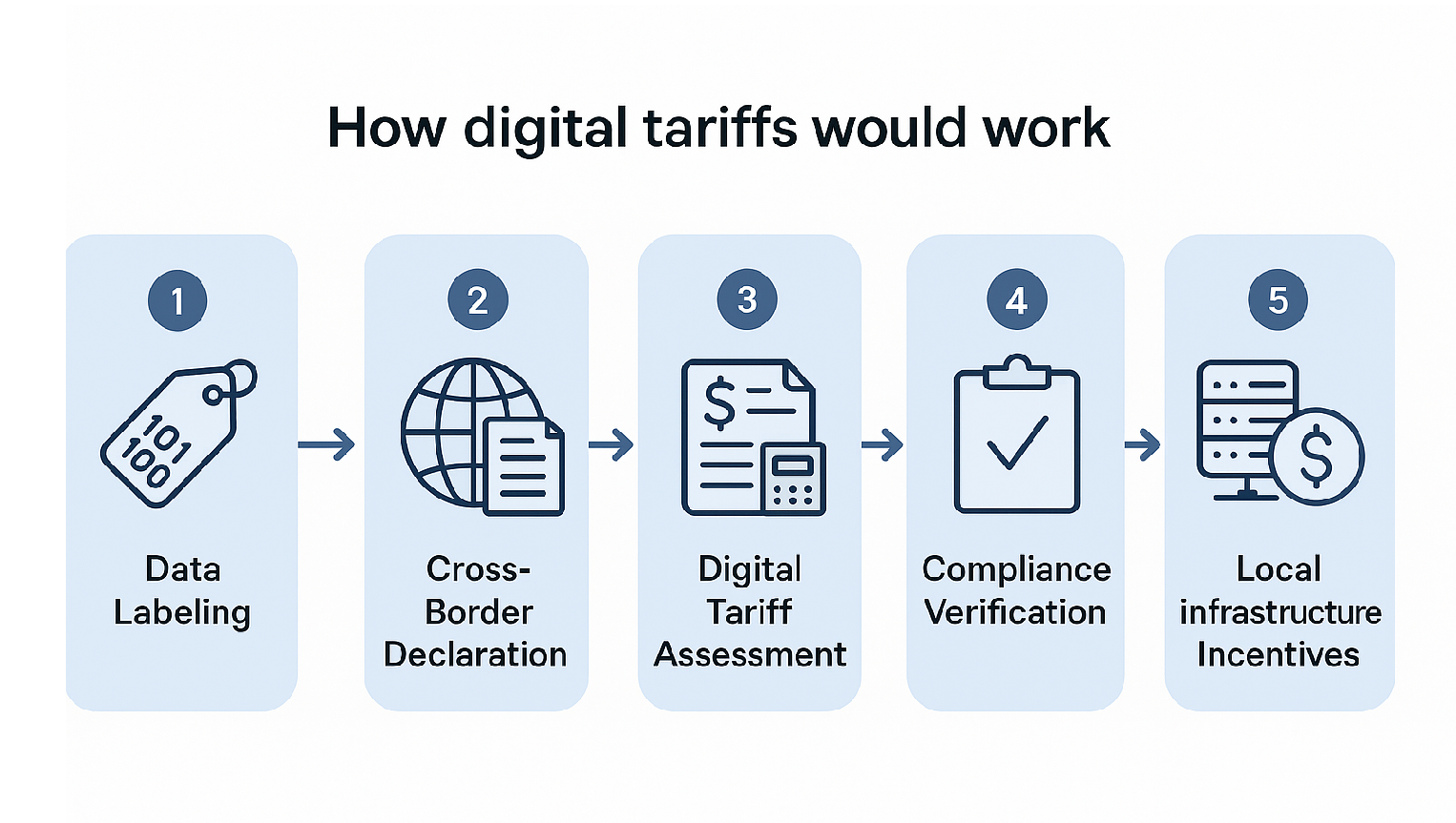
A global framework for Digital Tariffs would involve:
1. Data Labeling & Governance: Every data packet is tagged with its origin, purpose, and sensitivity level.
2. Cross-Border Declarations: Companies declare data transfers just as they would declare physical goods at customs.
3. Tiered Tariff System:
• Personal Data: Higher tariffs due to privacy risks.
• Commercial Data: Moderate tariffs based on economic impact.
• Public Data: Minimal tariffs, encouraging transparency and research.
The Ripple Effect of Digital Tariffs
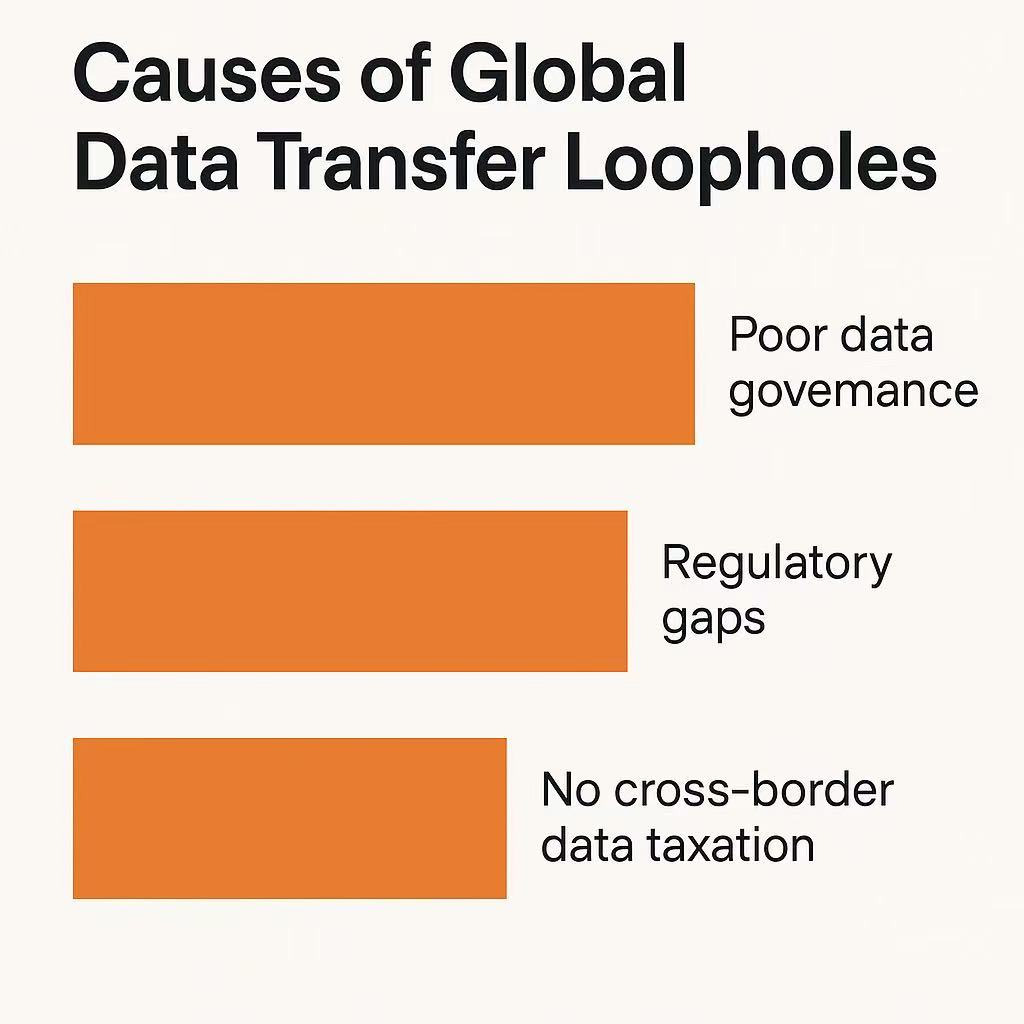
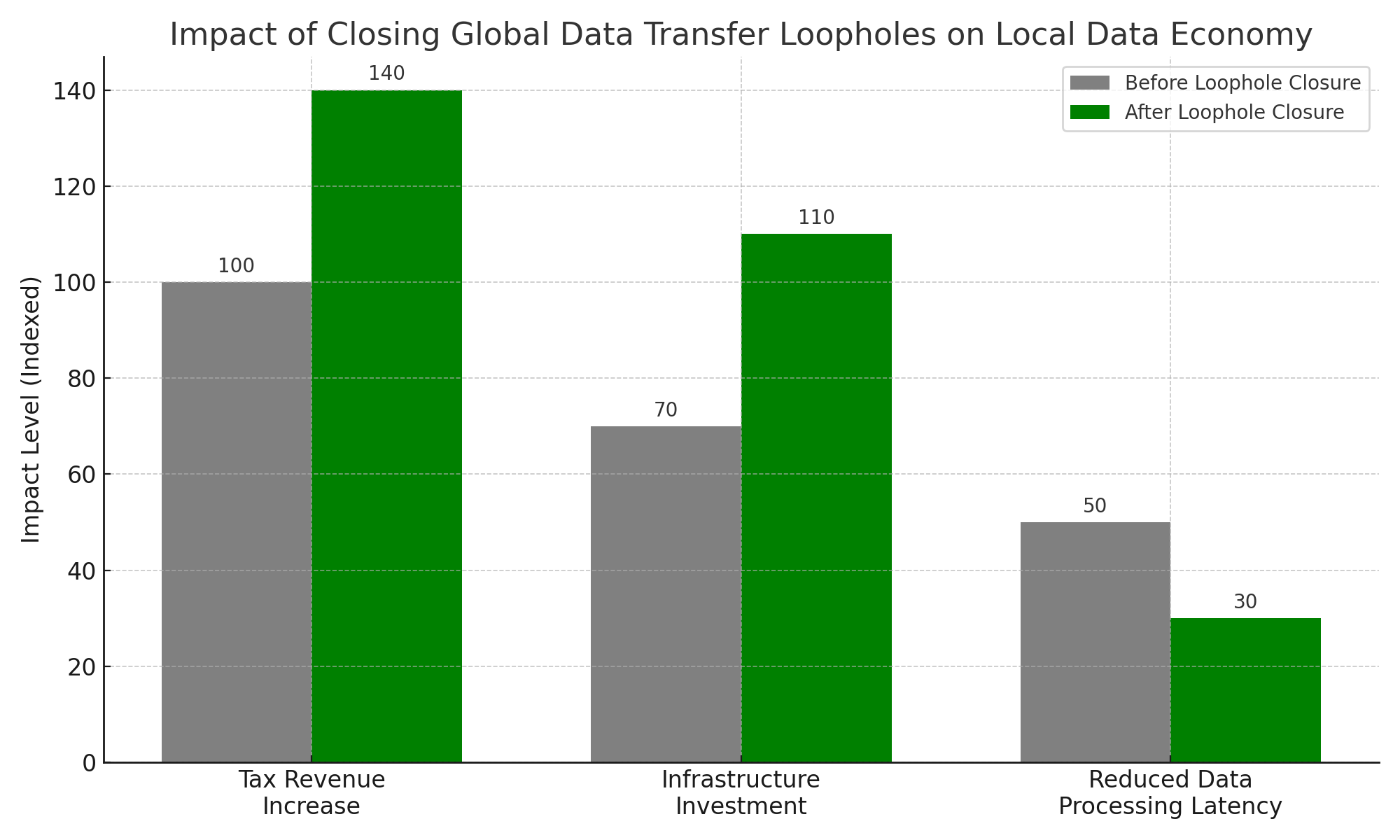
The implementation of Digital Tariffs would reshape the internet’s architecture:
• Localized Data Centers: To minimize tariffs, companies would be incentivized to build local storage facilities.
• Increased Compliance: Enhanced transparency in data transfers would demand stricter data governance.
• Economic Redistribution: Revenue from Digital Tariffs could be redirected to national digital infrastructure projects.
Example 3: Amazon Web Services (AWS)
AWS operates 31 regions globally, moving customer data seamlessly across borders. With Digital Tariffs, AWS would face financial disincentives to freely move European user data to American servers. This could lead to more localized cloud services and distributed cloud architecture.
S8fe.ai: Powering the Next Era of Data Compliance
At Safe.ai, we believe that Digital Tariffs are the cornerstone of a new digital economy. Our platform is designed to:
• Map Data Transfers: Visualize where your data flows and assess its tax exposure.
• Label & Govern: Seamlessly categorize data for compliance with emerging tariff regulations.
• Automate Declarations: Generate real-time digital customs reports for cross-border transfers.
The future of data is not just about movement; it’s about accountability and value. With Digital Tariffs, we’re setting the foundation for a new kind of trade—one where data is finally treated as the sovereign asset it is.