

For decades, global trade has been defined by tariffs on physical goods—cars, textiles, electronics. Yet, in our hyper-connected world, the most valuable commodity crossing borders is data. Unlike oil or steel, these flows are largely untaxed and unmonitored, representing a massive economic blind spot. The future of global trade will include Digital Tariffs—taxes applied to the cross-border transfer of data, treating it as the sovereign asset it truly is.
Data as the Backbone of the Global Economy
Data is not just information; it’s the currency of the digital age. It drives everything from financial transactions to personalized medicine, AI development, and global supply chains. Despite its immense value, its movement across borders remains largely untaxed.
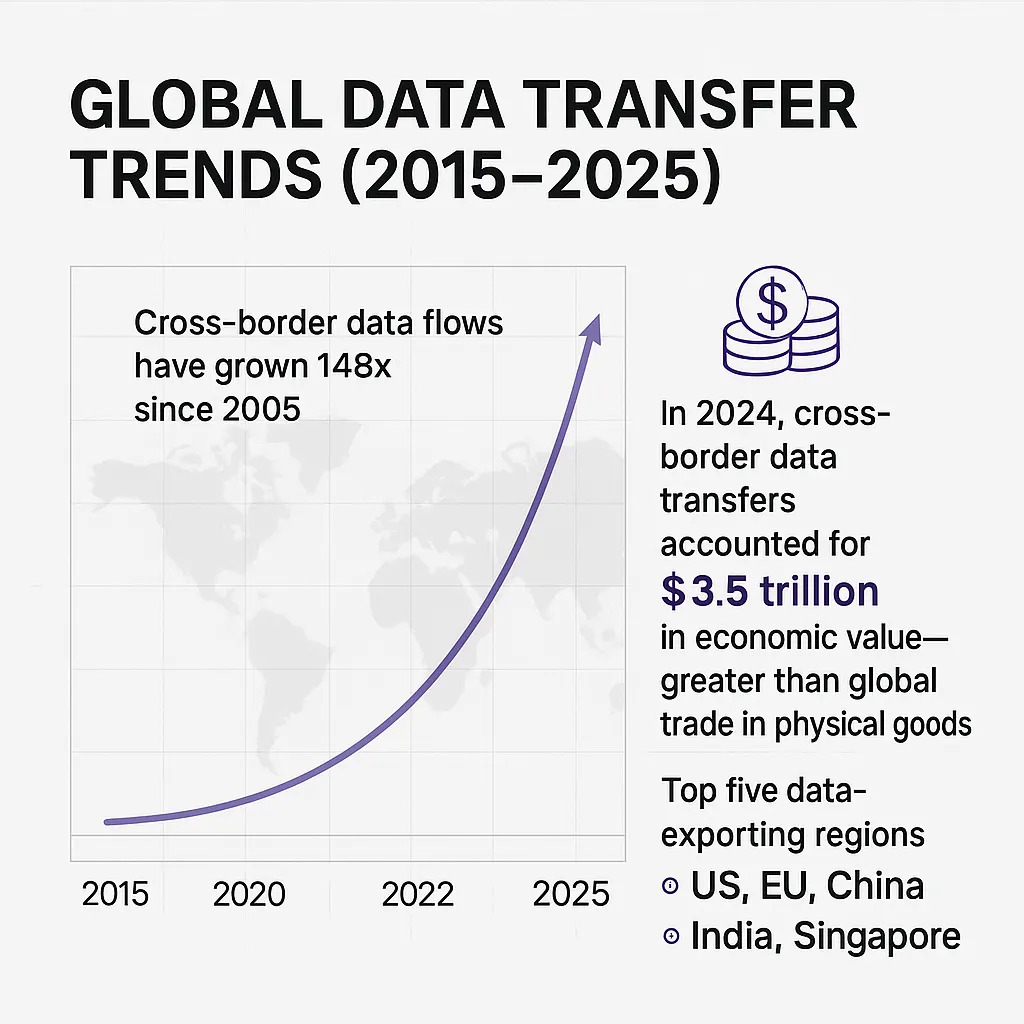
Global Data Transfer Trends (2015–2025)
Data flows have grown exponentially, representing trillions in economic value
• Cross-border data flows have grown 148x since 2005.
• In 2024, cross-border data transfers accounted for $3.5 trillion in economic value—greater than global trade in physical goods.
• The top five data-exporting regions: US, EU, China, India, and Singapore.
What Happens During a Data Transfer?
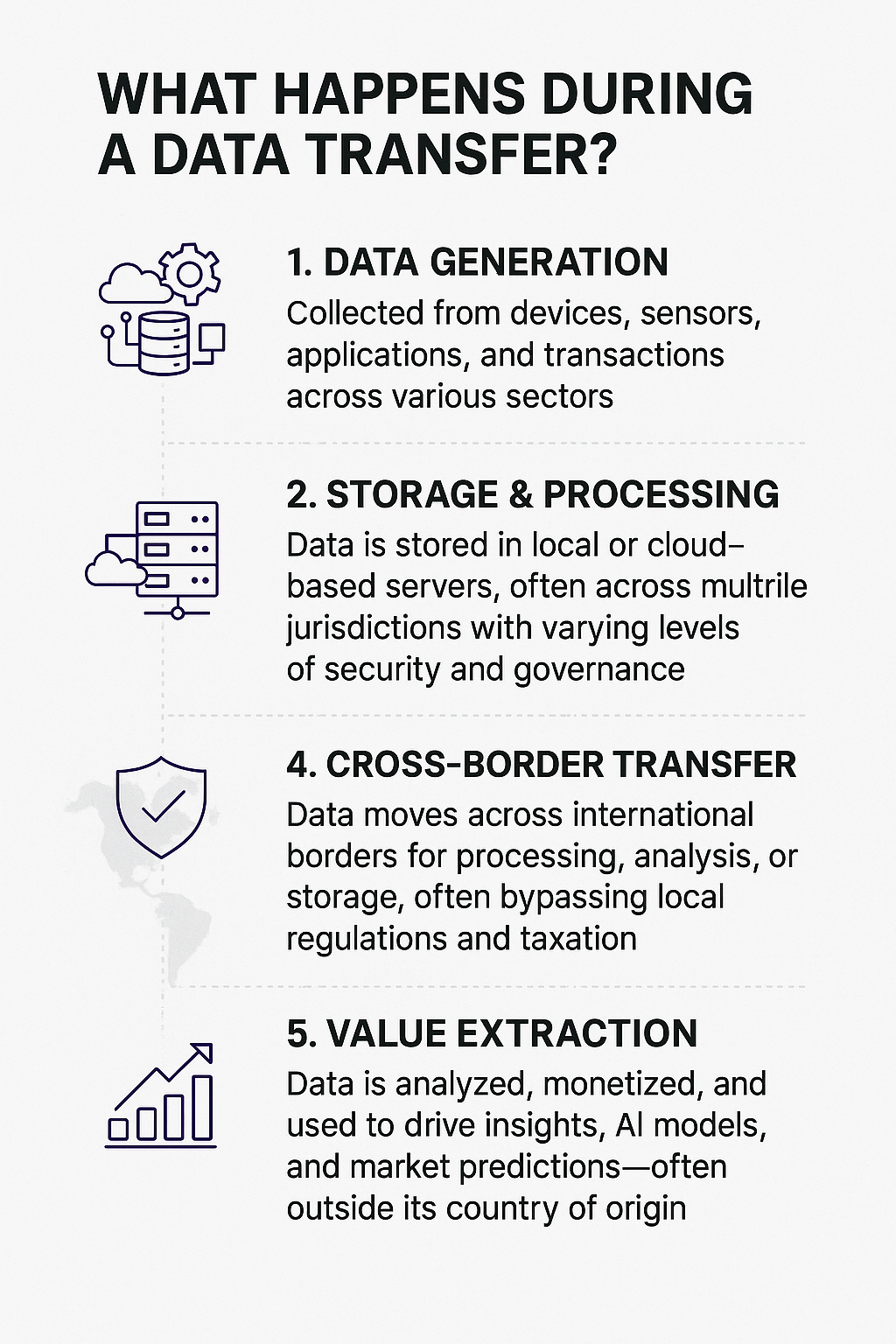
Data isn’t just sent; it’s processed, stored, and exposed to varying degrees of risk.
• Data Generation: Collected from devices, sensors, and transactions.
• Storage & Processing: Often stored in data centers across different jurisdictions.
• Transfer: Moved across borders for processing, analysis, or sharing with third parties.
• Risk & Compliance: Subject to varying regulations like GDPR, PIPL, and CCPA.
Why Digital Tariffs?
When a shipment of electronics or pharmaceuticals crosses international borders, it is taxed, inspected, and declared. Yet, when sensitive data—health records, financial transactions, intellectual property—flows from San Francisco to Shanghai, it passes invisibly across borders, untaxed and unmonitored.
Example 1: Apple and Cross-Border Data
Apple’s iCloud services store data in multiple jurisdictions. Under China’s Cybersecurity Law, Apple moved Chinese user data to local servers operated by a state-owned company. If Digital Tariffs existed, Apple would have to account for the cost of exporting sensitive data, potentially encouraging more localized storage.
Example 2: Financial Institutions and Data Governance
Global banks transfer massive volumes of transactional data daily. Under GDPR, these transfers are scrutinized for privacy but remain untaxed. Introducing Digital Tariffs would reshape where data is processed, with financial hubs potentially shifting storage to avoid cross-border costs.
Data Sovereignty: Nations Redraw Digital Borders
The concept of Data Sovereignty is rapidly gaining momentum. Countries like China, Vietnam or Saudi Arabia are fortifying digital borders, demanding that data generated within their jurisdictions remains accessible—and down the line taxable—by local authorities. China is considering that data may be treated as assets from an accounting perspective and by rolling out its digitalization of invoice collecting process is ready for a next stage of tax review and collection. This is about more than control; it’s about revenue.
Example 3: India’s Digital Personal Data Protection Act (DPDPA)
India’s DPDPA enforces strict localization requirements for sensitive data, aiming to keep financial and health information within its borders. Now imagine if every gigabyte of data leaving India were subject to Digital Tariffs. It would create a regulated economic flow for data, much like tariffs on manufactured goods.
How Digital Tariffs Would Work?
Just as goods are categorized and taxed based on value and risk, data would be labeled, governed, and taxed:
• Personal Data (e.g., health, finance): Higher tariff due to sensitivity and privacy concerns.
• Commercial Data (e.g., supply chain metrics): Medium tariff based on competitive risk.
• Open Data (e.g., public statistics): Low or zero tariff due to public accessibility.
Data flows would require:
1. Digital Declarations: Companies report the nature, volume, and destination of transferred data.
2. Governance & Labeling: Data is tagged by sensitivity and purpose.
3. Auditable Trails: Transfers are logged for compliance verification.
The Implications of Digital Tariffs
Introducing Digital Tariffs would disrupt global business models. Companies would need to:
• Localize Data Storage: To minimize cross-border tariffs, companies may store data closer to its source.
• Invest in Governance: Transparent and well-labeled data would reduce friction in global transfers.
• Strategize Digital Trade Routes: Just as physical trade routes are optimized, digital pathways would be scrutinized for cost and compliance.
Example 4: Amazon Web Services (AWS) and Data Localization
AWS currently operates 36 geographic regions worldwide. A model of Digital Tariffs would push AWS to localize even further, potentially driving up costs for global clients who now need to account for crossborder data costs.
S8FE.AI: Pioneering Transparent, Compliant Data Transfers
At S8FE.AI, we are building the infrastructure to enable secure, transparent, and tariff-aware data flows. Our platform allows companies to:
• Seamlessly label and govern data for compliant cross-border transfers.
• Generate real-time digital declarations for global data movements.
• Prepare for a world where data is not just transferred—it is tariffed and traced.