

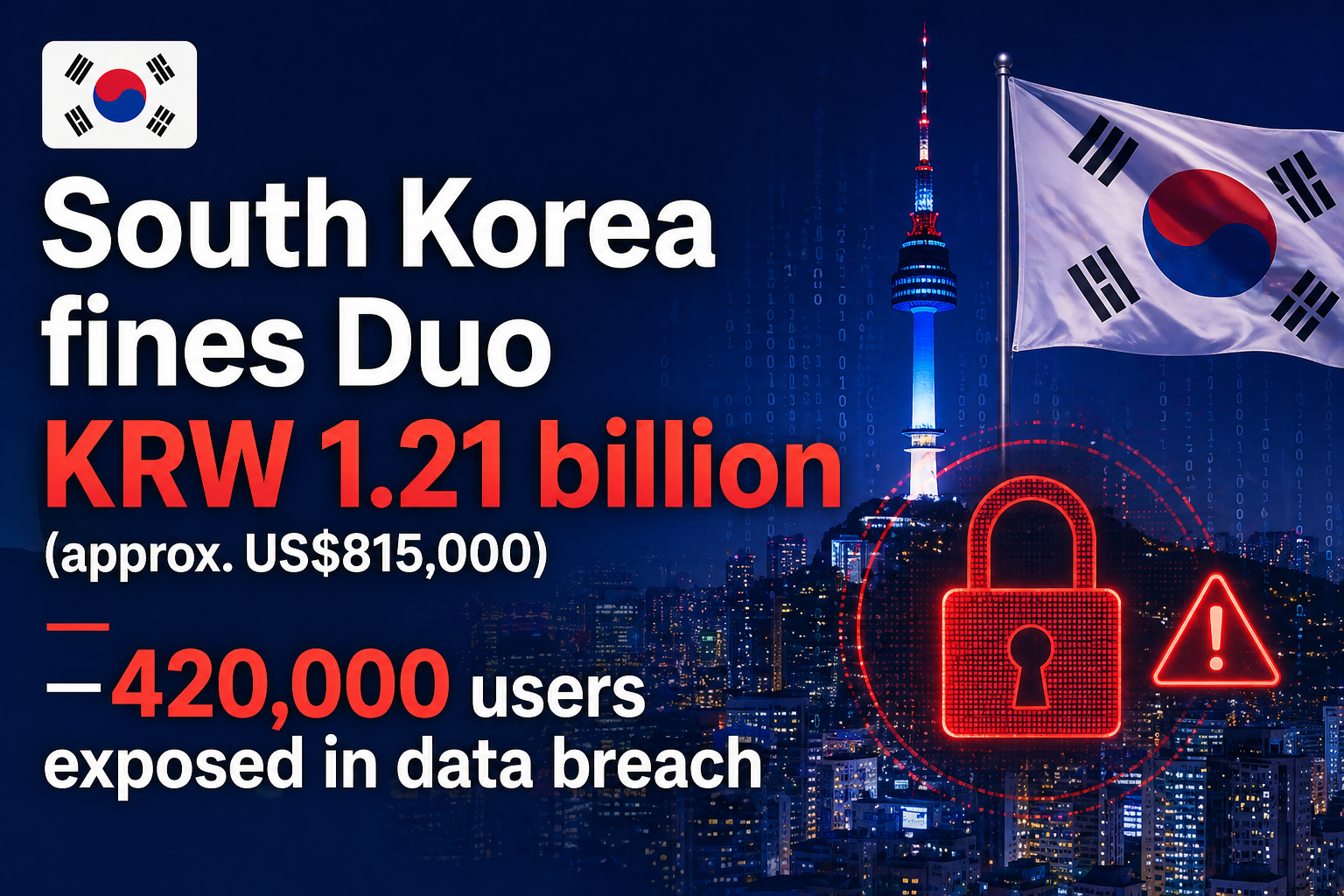
South Korea just delivered a clear signal: data retention failures + weak security + delayed response = one enforcement event
The Personal Information Protection Commission (PIPC) fined matchmaking company Duo after a cyberattack exposed 420,000+ users’ data, including highly sensitive profile details.
What Was Exposed
• Weight & blood type
• Marital history
• Phone numbers
• Home addresses
• Education & workplaces
Why This Matters
1. Context defines “sensitive data”
Not just legal categories—real-world harm (discrimination, fraud, reputational risk) is driving enforcement.
2. Breach + slow response = compounded liability
It’s no longer just if you were breached— it’s how fast and effectively you reacted
3. Data retention is now enforceable risk
~300,000 outdated records (5+ years) were not deleted
Legacy data = amplified exposure + penalties
4. Trust-driven sectors face higher stakes
Dating | Healthcare | Fintech | HR
When users share deeply personal data, privacy failures directly hit growth & retention
What Compliance Teams Should Do Now
• Minimize non-essential data collection
• Apply stricter controls to high-sensitivity datasets 🔐
• Enforce deletion schedules for dormant accounts 🗑️
• Regularly test breach response playbooks ⏱️
• Audit vendors & legacy systems
Bottom Line
Regulators are no longer treating breaches as isolated IT incidents.
They are auditing the entire data lifecycle:
What you collect → why you keep it → how you protect it → how fast you respond.
How S8fe.ai Helps
S8fe.ai enables organizations to operationalize data lifecycle compliance—from data minimization to automated retention enforcement and breach response readiness.
Turn regulatory expectations into continuous, system-level controls.
Source: https://lnkd.in/dmcZ4TEg