

For years, governments around the world have struggled to tax the digital economy. Traditional tax systems were built for physical goods and services—not for algorithms, platforms, and the invisible flows of data that cross borders at light speed.
The result? A massive loophole in the global economy.
Big Tech companies generate immense value from user data collected in one jurisdiction, process and monetize it in another—and often pay little or no taxes in the country of origin.
This imbalance is no longer tenable. 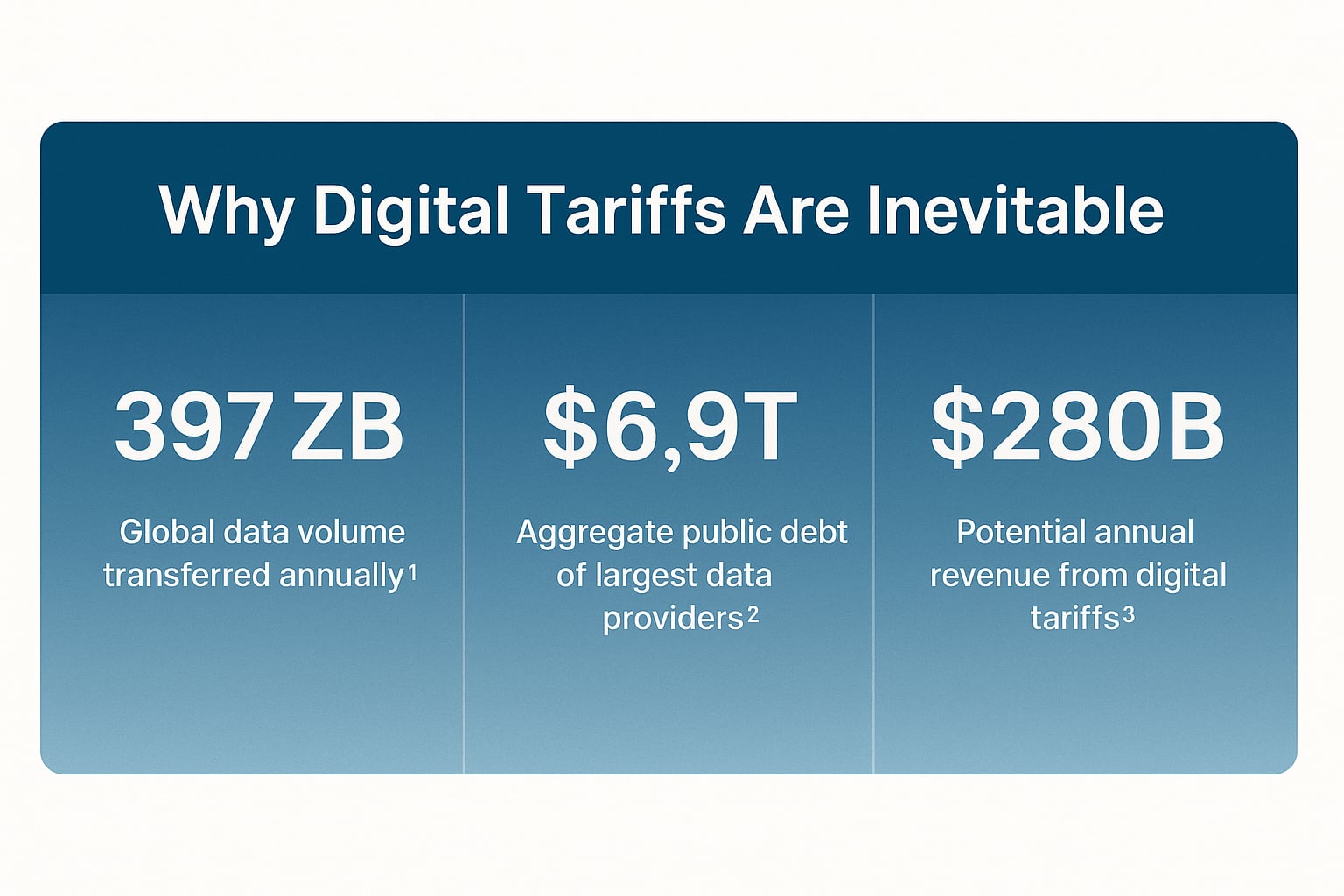
1. “Data traffic based on Cisco Annual Internet Report (2023)”
Meaning: This footnote tells the viewer that the data volume statistics (like “data transfers in zettabytes”) are taken from Cisco’s 2023 report. Cisco is a major global network equipment company that publishes trusted global internet traffic forecasts.
2. “Deficit and GDP data from IMF World Economic Outlook Database (2023)”
Meaning: This clarifies that the GDP and public deficit figures used (for countries like the U.S., China, or France) are sourced from the International Monetary Fund (IMF) — specifically their 2023 data. It gives credibility to fiscal stats shown.
3. “Digital tariff estimation based on 0.5% of total outbound crossborder data volume at $0.005/MB
Meaning: This footnote explains the assumption used to estimate how much digital tariffs might generate. It suggests:
• A 0.5% tax rate is applied
• On outbound cross-border data
• Valuing the data at $0.005 per megabyte (MB)
That’s why digital tariffs—taxing data flows themselves—are gaining traction as the only realistic path to restoring fiscal fairness in the digital age.
What Are Digital Tariffs?
Digital tariffs are a new frontier in global trade: treat outbound data flows as taxable events, just like the export of goods.
But unlike traditional tariffs based solely on quantity or weight, digital tariffs can be calibrated based on:
• Volume of data (how much is transferred)
• Nature of data (e.g. personal, sensitive, commercial IP, health data)
• Destination (e.g. trusted or untrusted jurisdictions)
This approach treats data as a sovereign economic asset. When it leaves a country, it carries value—financial, strategic, and social. Just like crude oil, pharmaceuticals, or agricultural goods, that value should be recognized and taxed.
Why Now?
Let’s look at a few real-world examples.
• France: French users generate enormous volumes of behavioral, location, and purchase data through apps like Instagram, TikTok, and Amazon. But while this data is monetized abroad, France collects little direct tax revenue from the activity itself. Traditional corporate taxes miss the mark entirely.
• Brazil: Brazil is one of the largest markets for WhatsApp and Meta products. The platforms’ parent company collects vast user insights—shipped to the U.S. for monetization through advertising algorithms. Meanwhile, Brazil faces infrastructure costs and regulatory burdens but earns no “data dividend.”
• India: India’s concerns about outbound data transfers led it to propose “data localization” policies. But outright bans or forced local hosting are blunt instruments. Digital tariffs could offer a more flexible, nuanced way to preserve sovereignty without stifling innovation.
In each case, data leaves the country, value is created elsewhere, and the country of origin receives no visibility, no control, and no revenue.
Why It’s Hard
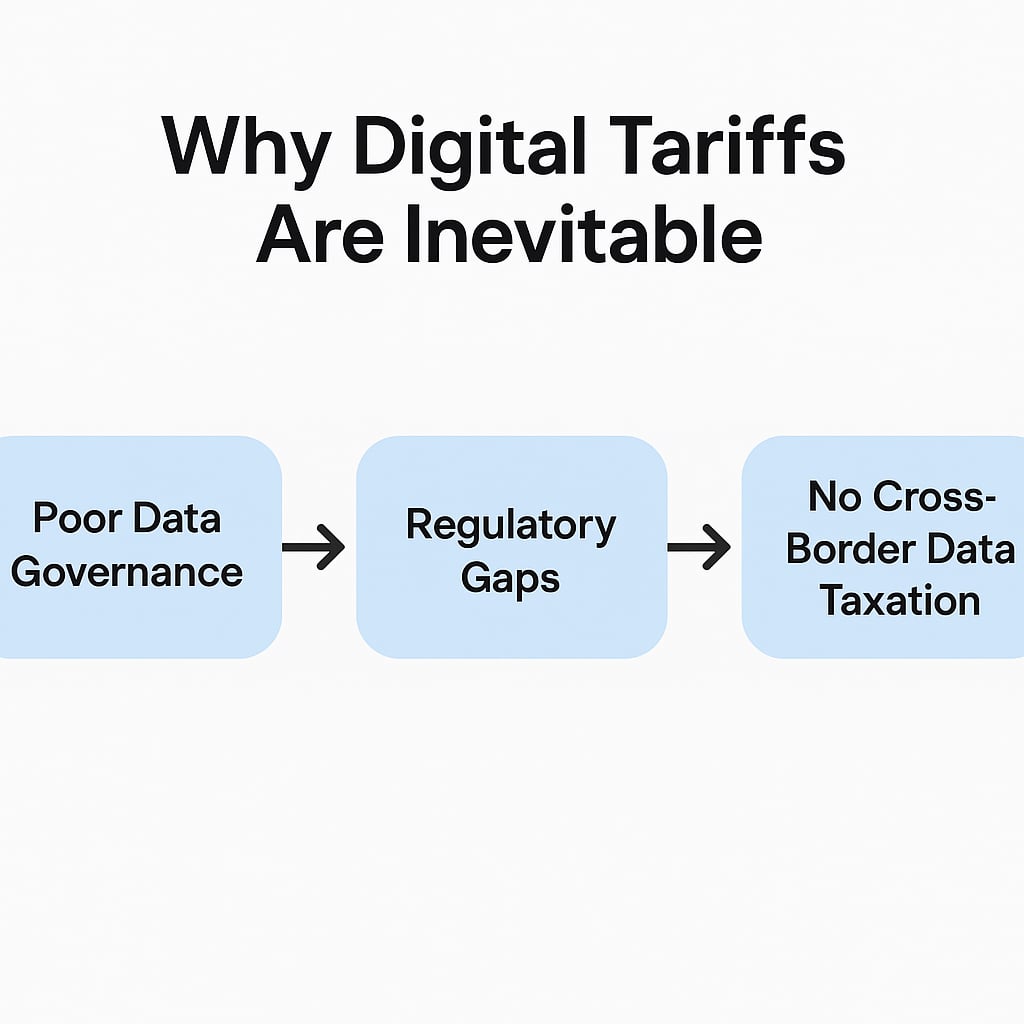
Here’s the catch: to impose digital tariffs, you need to know what’s leaving your borders.
And most governments or companies don’t.
To tax data, countries need granular, real-time visibility into outbound data flows:
• What kind of data is leaving?
• How sensitive is it?
• Who owns it, and where is it going?
• Is it part of a commercial transaction, or just analytics?
This is where S8fe.ai steps in.
We provide a lightweight, enterprise-grade solution that enables companies to monitor, categorize, and report on outbound data transfers—without ever processing the data itself.
Think of it like a customs declaration for data: You stay compliant, transparent, and audit-ready.
How This Could Reshape the Digital Economy
Implementing digital tariffs would likely have ripple effects across the ecosystem:
• Tech giants would have to rethink global data architectures and possibly localize some infrastructure
• Governments would finally gain a lever to tax digital activity fairly, without stifling innovation
• Startups and local providers may benefit from a more level playing field, as hyperscalers are nudged toward domestic compliance
• Consumers might see higher costs—yes—but also better protection, transparency, and reinvestment in local digital capacity.
Just like tariffs on foreign cars helped some countries develop their own auto industries, digital tariffs could stimulate local cloud services, AI ecosystems, and sovereign infrastructure.
A Fairer Future
Taxation is always about trade-offs. But the current trade in data is entirely lopsided. A handful of global platforms reap the benefits, while individual nations absorb the externality.
If we want a fairer digital economy, we must stop pretending data is weightless and border-less.
It’s time to treat it like the strategic, monetizable, and taxable asset it really is. And for that, digital tariffs are not just an idea—they’re an inevitability.